Church Chronicles Georgia History of Slavery Through Present

Chatham County, Georgia | Built c. 1896
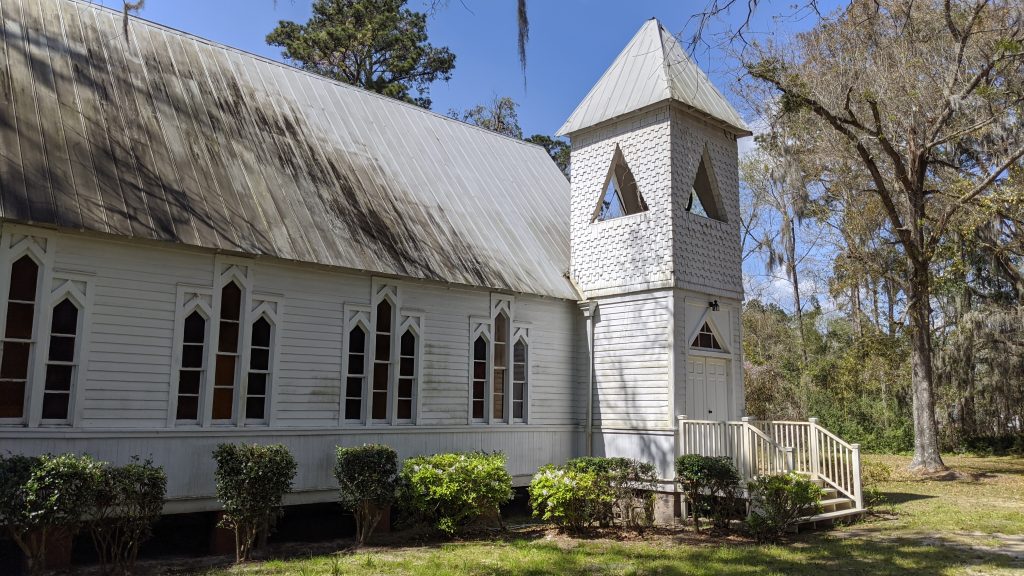
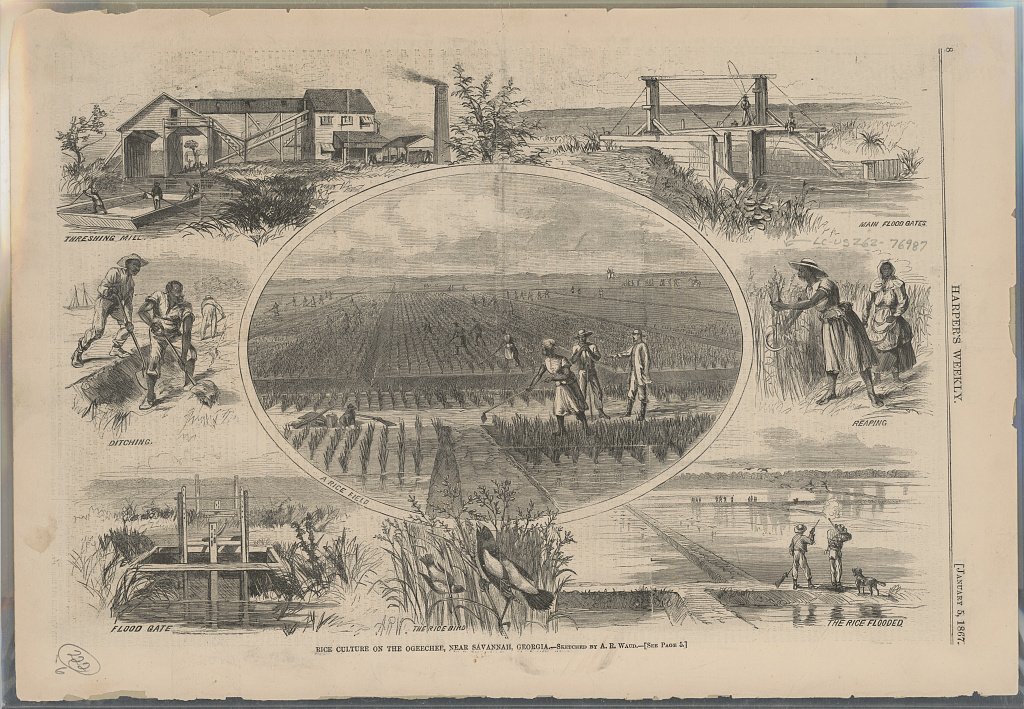
The impressive church that stands here today is the most visible reminder of the community of Burroughs, Georgia which was founded by freedmen and women following the Civil War. The building was erected in 1896, but its history reaches back many decades prior when this region was dotted with rice plantations. Back then, much of the population of this region was enslaved workers who cultivated the area’s rice fields.
Before the Civil War
By the early 1800s, the Episcopal Church had taken an interest in converting enslaved people, and in the 1840s, an Episcopal congregation was established here on a rice plantation. Founded by Reverend William G. Williams to serve white families from three area plantations, this early church also welcomed enslaved people to their church membership. During this period, approximately 1,000 people were enslaved in the rice fields of the large plantations on a neck of land on the Ogeechee River.
The Episcopal Church encouraged the education of its black members because they believed this was critical to their understanding of church liturgy. And while they could learn to read, it was illegal to teach an enslaved person to write. In the 1840s, Rev. Williams established a school here and by the time of the Civil War, his congregation was the largest, white or black, in the Episcopal Diocese of Georgia.
The Burroughs Community
Following the Civil War, many of the former slaves remained in the area on land which they had leased, or in some cases, purchased from former plantation owners. In the 1870s and 1880s, the community of Burroughs was established by freed people who were formerly enslaved in the rice fields. Because many of these people were members of the Episcopal Church, it made sense for them to establish their own church which would become the center of life at Burroughs.
“The area became one of the first independent towns. One of the first black towns.”
~Pastor Charles Hoskins
A Church is Built
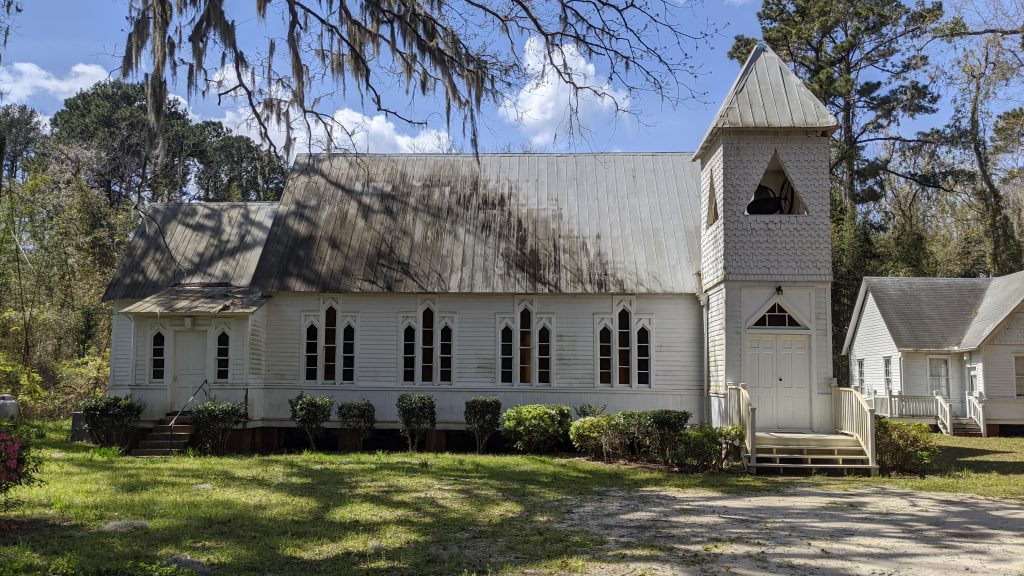
In 1881, a donation of $400 was given to the diocese by the Women’s Auxiliary Club at St. Bartholomew’s Episcopal Church in New York City with the intent of building. a permanent church for the community. In 1896, construction began on an impressive structure that was completed later that year and named in honor of its largest patron. The church is certainly unique for its rural setting and is an excellent example of a late-nineteenth-century church designed in the Victorian style. Its most notable architectural feature is the Victorian carpenter gothic windows which fill the sanctuary with beautiful bright light.
St. Bartholomew’s Academy at Burroughs
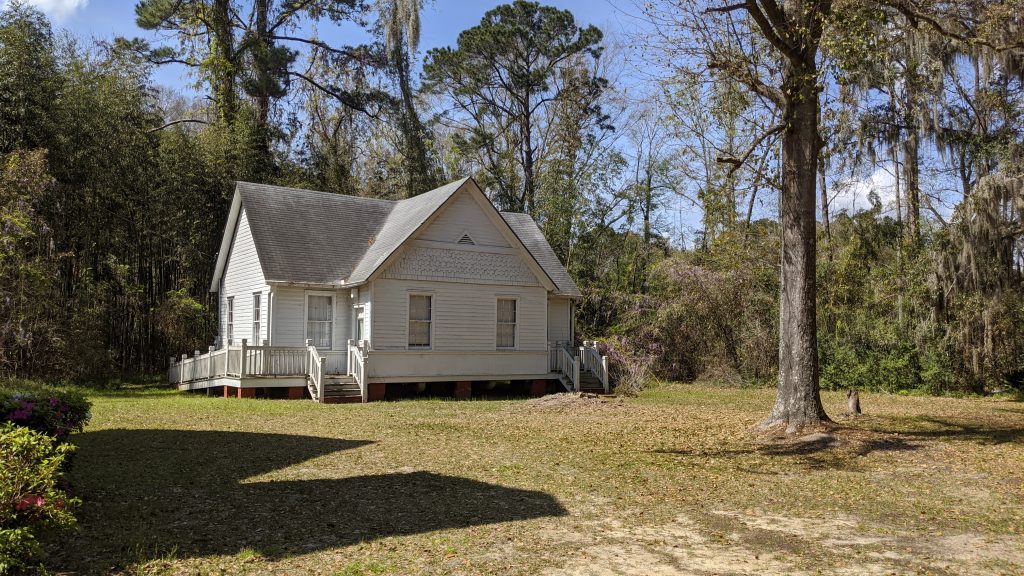
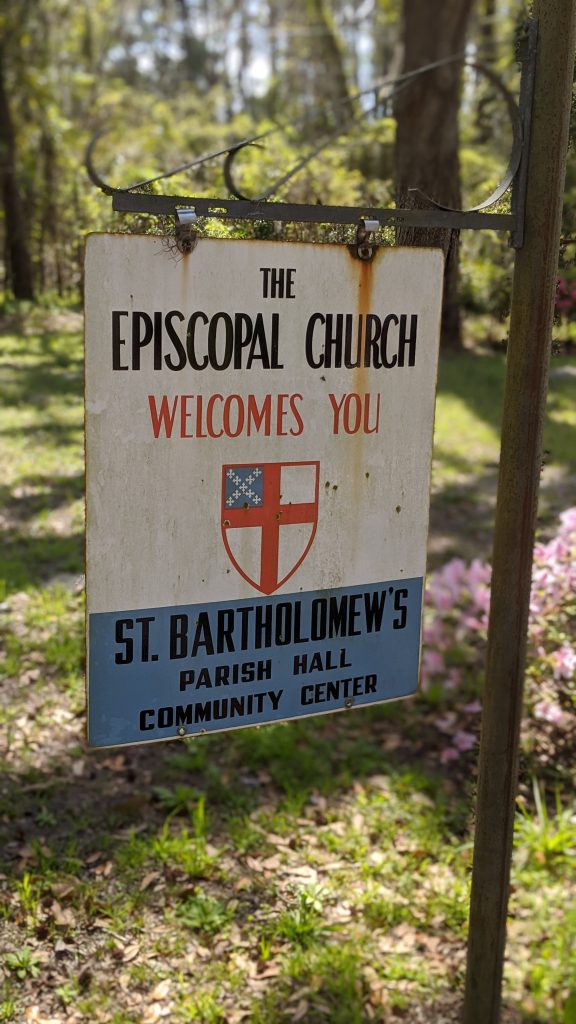
One year after the new church was built, a school was established on the same property and a schoolhouse was erected adjacent to St. Bartholomew’s Church. The church ran the school until 1916 when Chatham County took over administration of the school. The school was the only one available to the students in Burroughs and continued to operate until the 1950s. In 1951, area schools were consolidated and students were bussed to bigger schools nearby at which point, the former schoolhouse was converted for use as a parish building and community center.
St. Bartholomew’s Episcopal Church has always played an important role in the community of Burroughs which was incorporated as a town in 1898. For a period of time, Burroughs prospered as a railhead for local agriculture and the membership at St. Bartholomew’s grew to more than 400 members. But this prosperity would be short-lived.
“The problem was, most of the blacks didn’t own the land. They were workers. And as their children came up, there were no jobs. So they left.”
~Father Charles Hoskins
As the younger citizens of Burroughs moved away for better opportunities, the population of Burroughs dwindled to 300 and the congregation here shrunk to single-digit numbers. However, the diocese has chosen not to shutter this historic church and semi-annual services are still being held. This makes St. Bartholomew’s the oldest continuing black congregation in the Episcopal Diocese of Georgia.
St. Bartholomew’s Today
In 1982, the church was added to the National Register of Historic Places and today, it is well maintained by locals who care about the history that is held within these walls. The former school now serves as a parish hall and offers a community health clinic, sewing classes, and many other community activities. There are only 4 members left today, but they’re fiercely proud of their church. One of these remaining members is Vernire Latson who has attended here all her life. She said:
“This was my parents church. We had a large congregation but the older folks are dead and the younger ones have moved away. So it’s small now. But even though it’s small, it’s still close knit.”